
Unsupervised

It does not happen often, but hubby has gone to the Bay Area for the weekend and left me unsupervised.

So, what does a girl do with her own time? The possibilities are many. Without a man to feed and care for, she has time for other things. Like quilting. Gardening. Shopping (online because no shopping malls are up in the mountains.) She could read all day long. She could research her next book, watch chick flix, or take a nap.

Yesterday was day one of my unsupervised weekend. What did I do? I began Spring Cleaning. The master bedroom needed good dusting, so I started deep cleaning the furniture with Murphy’s Oil Soap. I still have Hubby’s dresser and the bookshelves to do. These will involve moving items around, dusting them, and scrubbing the furniture. I figure it is another half-day. Because my wrists and arms are sore today, I am moving on to using different muscles

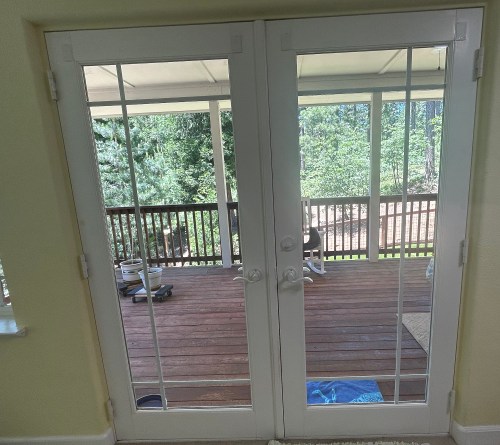
This morning (day two), I got up early and worked outside washing my bay window and my French doors. The inside of the bay window involved heavy twisting, reaching, and climbing, which was another 30 minutes of hard labor. The living room windows were washed while lunch was cooking.

I learned something important that day. When the window glass is free of soot and grime, but you didn’t wash the window sills first, they really look hideous now.
Day three involved cleaning out drawers and cupboards in the kitchen that were overfull and haphazardly organized, so you could not find anything. When I removed all the contents, I found many interesting things, especially dirt, crumbs, and dust. It was exciting to not only see the bottom of the drawer but that it was clean. Bonus thrill – I got to toss user guides for items we no longer had.

You might think I need a life at this point. Four days unsupervised, and I am still slaving away cleaning. I hate a dirty house. Perhaps you should imagine a maid cleaning to a soundtrack of 80s and 90s rock. Most songs I dance and sing along with while working. This is how I multitask these days.

Hubby is no help. He tosses nothing out. He silently delegates this to me. At times, he will say out loud, as he is looking into the fridge, “This item-x should probably get tossed,” or “There is an unknown substance in the back of the bottom shelf.” Dare I think that he was taking care of it?
Two days later I see item-x still rotting away in there. This blows my mind in ways that I can’t explain. Why tell me? Why not throw it away? Who elected me the queen of the trash? This could explain why our kitchen trash and recycle cans overflow until I empty them. People (i.e., visiting adult children) will pile up trash and recycle items on the kitchen counters if the inside receptacles are full.

Who raised these people? Did their roommates teach them this? I vaguely remember when they were teens living at home, telling them I could not wait until they had homes of their own so I could come to visit and not clean up after myself and treat the furniture badly.

They must have believed me.

The Alerts Just Keep on Coming…

Diabetic Equipment Stuff

My new insulin pump gets data from the CGM (blood sugar monitor) and adjusts the insulin rate accordingly. It is like I have a working pancreas most of the time. Some settings must be adjusted, and I must do my part by entering carb data. Until those things become routine, I have alarms going off day and night. That’s right—an alarm alerts me if my glucose is too high. I will give myself insulin to correct the high. Now, I get alerted to the fact that my glucose is dropping too quickly. OK.

The next alert is because my glucose levels are dangerously low. To treat this, I must eat/drink sugar. Then, the whole cycle starts over. My daily chart looks like the Himalayas. I don’t mind the alarms/alerts so much, but my puppy freaks out when she hears them. My hubby usually hears them before they wake me up, so he is annoyed. With me.

When anything beeps or buzzes in my house, everyone looks at me—like I am the only thing that beeps! The dishwasher, washing machine, computers, and telephones also make noise. Since the equipment is also new to me, I can’t be sure if it’s me or something else. I do know one thing: I’m exhausted.

I put the equipment on silent, so most of the alerts don’t sound. However, the critical ones bypass any volume setting and blare at max decibels. Since I must keep the sensor reading equipment within 20 feet of my person, this is quite jarring. Imagine how unnerving it is to sit next to me in a quiet meeting when my blood sugar begins to tank. It actually unnerves everyone in the building, but the closer you are to the source (me), the worse it is.

Technology has done wonders for diabetics to become more balanced and healthy. I have to wonder, though – is it eroding my mental health to live like this?

TTFN

May is …

How nice.

I am aware, thank you very much.

Mental Illness runs on my Mom’s side of the family. Grandma was diagnosed with “manic depressive” syndrome. So was my Mom, myself, then my sister. People are no longer diagnosed with Manic Depression. They call it Bipolar now, but we are talking about the same kind of crazy.

Also, from my mom’s side, I have Type I Diabetes. The T1D research group I belong to published this article in their May newsletter. Whether you have diabetes or not, I think you may find it interesting.

For people living with type 1 diabetes (T1D), self-management requires an extraordinary amount of decision-making every day. In fact, research suggests this tallies to about 180 more health-related decisions than someone living without diabetes.   This level of stress can affect a person’s emotional well-being, leading to feelings of frustration, burnout, and diabetes distress. And it’s why your healthcare provider may regularly use an assessment tool to monitor your mental health.   According to our Registry data, participants with T1D also self-reported the following diagnoses. While these numbers are only representative of our participants, they are telling.
Anxiety (24.9%)
Depression (24.2%)
Eating disorders (3.2%)
Diabetes distress (2.4%)
PTSD (0.3%)
That said, on average, research suggests people with T1D are 2 to 3 times more likely to have depression than someone without T1D. But only 25-50% of these individuals are diagnosed and treated. That’s why it’s important to be honest about your feelings and advocate for yourself or a loved one. While caring for your physical health is essential, your mental health is equally important.   The T1D Exchange Registry is dedicated to improving the lives of those living with T1D. One way we do this is by supporting mental health research in T1D. A current study, Mental Health Support Experiences and T1D, aims to better understand participants’ experiences when talking with diabetes care providers about their mental health and well-being.

To find out more about the T1D Exchange Registry, see their website.

TTFN