
Diabetes: A Day In The Life

OK. Let’s forget that I have an insulin pump in a box – for a while. Before we journey though that adventure together I would like to explain how my everyday routine is like now – before using a pump.

My day begins with a finger stick and a blood test to show my ‘fasting’  sugar level.  DiabeticDailyChart  I write this number down on t0day’s page in my booklet of blank diabetic charts. Blood sugar readings are only one of many rows & columns this sheet has.
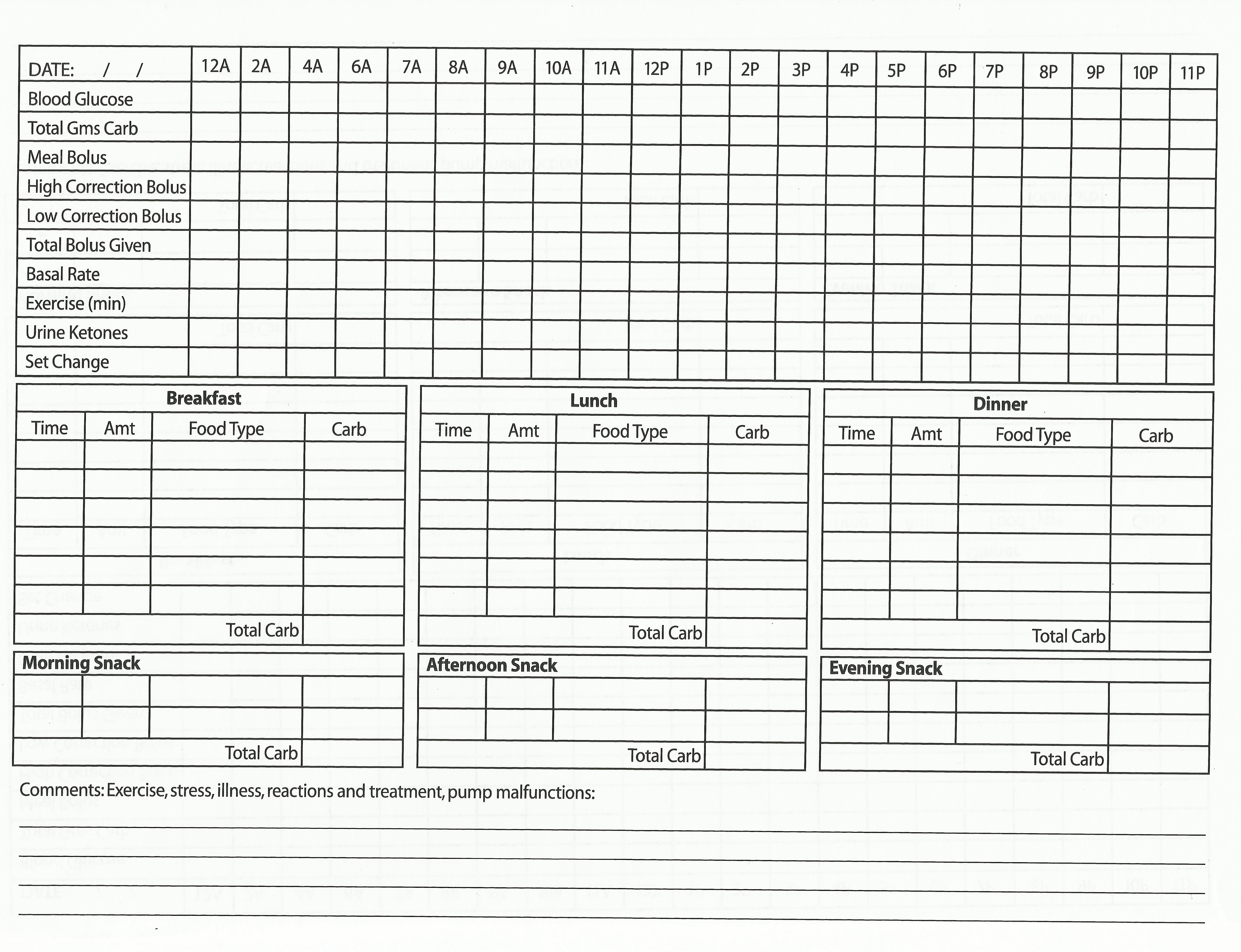
Sometimes, like this morning, I wake up early with low blood sugar. I hate this because at 4:00AM I do not want to have breakfast. I drink 1/2 cup of juice, and I try to go back to sleep. Not happening. By 8:00AM my blood sugar is way high before breakfast. Why? Because my liver panicked and dumped glucose into my blood stream. At least that’s what I’ve been told. So, now I not only have to figure out how much insulin I need to take care of breakfast, but how much I need to correct the “high”.

So.. I guess I should have eaten breakfast at 4:30AM.  There are no columns for glucose dumping livers on my chart, so I need to jot down that question for my CDE. And I should get a large piece of paper!

There are three calculations I have to do to give myself NutritionLabelthe correct dose of insulin. The first one is to figure out the grams of carbs I plan to eat.. The second takes the # of grams and divides it by my insulin to carb ratio, which is 1:12 currently. And then I test my blood sugar. If it is over 160 I must add the correction dose [ (BG – 150) / 40 ] to the carb ratio, giving me the total number of units of insulin to inject. All these numbers + the foods I eat are written on my chart.

NovologSyringe  Now I can inject my insulin (into my stomach, as I’m told it works more effectively that way), eat breakfast and take oral medications. Prior to lunch and dinner I repeat the above. If at anytime during the day I feel “icky”, I test my blood and treat any low sugar incidents..

Before lunch and dinner the above steps are repeated. If I happen to be out and about at meal time the routine goes on. I carry my glucose meter, insulin “pen”, meds, emergency juice/glucose tabs and a snack, with me at all times, because I never know if plans will change. And they almost always do. I really need a bigger purse!

Medical Equipment
Entourage for a Diabetic

Around bedtime, my phone alarm goes off to remind me to take my long acting insulin (Lantus). I must have the alarm because I can’t seem to remember. For years, I used to take it in the mornings and even though I’ve done it in the evening for years I often forget until very late at night and that screws up the routine, don’t ya know.

Well, that pretty much sums up a regular day.  It gets really interesting when I have to travel or go to a convention where my schedule is not my own.  Sometimes it feels like all I do is poke myself with needles. Oh wait – that might be quilting… 😉

Pincushion

BTW – quilting pins hurt WAY MORE than diabetic needles!

..
photo credit: Jodi Lea
photo credit for vial & needles: NapInterrupted via photopin cc
photo credit: marlana via photopin cc

Diabetes: Rumors VS. Truth

Type I Diabetes runs in my family, so I grew up in a ‘diabetic friendly environment’. Occasionally, I forget that the lucky non-diabetic people have limited information about how we (people with diabetes) live with the disease and it’s consequences.

So… before I begin to write posts about my adventures with starting on insulin pump therapy, I want y’all to have  some background knowledge and dispel any ridiculous incorrect information you may have heard about the disease (or its victims).

Diabetics cannot have any sugar or they will go into a coma. Although it is true that we need to severely limit our intake of sugar, eating sugar will not make us fall over into a deep sleep.

Coma happens to diabetics that are not being treated or have not been diagnosed. An undiagnosed diabetic who does not eat sugar or a lot of carbohydrates, can still have drastically high blood glucose levels, and over time, will eventually become ill enough to be comatose.

If you eat too much sugar you will get diabetes. Totally not true. Ever.

DiabetesTesting
Severe low blood sugar

High blood sugar is more dangerous than low blood sugar.  False. Low blood sugar (under 60 mg/dL) can  cause sweaty clamminess, shaking, irritability, or violence. Severe low blood sugar (under 40 mg/dL) can cause  seizures, hallucinations, brain damage and death. High blood sugar over time will cause nasty complications, but not the immediate danger low blood sugar does.

Taking good care of yourself can make your diabetes go away. Totally not true. Ever. Diabetes is a disease that causes your pancreas to stop producing the insulin that helps your body break down sugar.

While it is true that a better diet and more exercise will help your body regulate glucose levels, your pancreas will not regenerate its way back to health. (Dammit!)

Diabetics have to eat meals based on recipes in ‘diabetic cookbooks’. No, we don’t!  We can eat any foods ‘normal’ people eat. We only have to ‘do the math’ to adjust our insulin dose and watch portions of carbs and fat.

People always ask me “can you eat this, or have that?” Yes, I can have a piece of that wedding cake. Or fruit salad. Or Christmas cookie. But I shouldn’t have any more than that. It’s a matter of proportion and choice.

Friends worry they will offer me something “bad for me” or “tempt me” into eating things I can’t have by eating them in front of me. STOP worrying! Prepare whatever menu you would like. I know what I should and shouldn’t eat. It is my responsibility – not yours.

I hope that by answering the questions that I am asked the most, will answer questions you may have about diabetes. If you have questions not answered here, please submit your question below. You may also submit diabetes related subject you would like to know more about  🙂

← Back

Thank you for your response. ✨

.

.

photo credit: DeathByBokeh via photopin cc

Sweet November

This month has a few observances that touch my life. Can you guess which ones?**

NOVEMBER 2013

American Diabetes Month American Diabetes Association

Native American Heritage Month Indian Health Service (HQ)

Diabetic Eye Disease Month Prevent Blindness America

Great American Smokeout Month American Cancer Society

National Alzheimer’s Disease Awareness Month Alzheimer’s Disease and Related Disorders Association

National Child Mental Health Month c/o New York University Child Study Center

National Epilepsy Awareness Month Epilepsy Foundation of America

National Family Caregivers Month National Family Caregivers Association

National Healthy Skin Month American Academy of Dermatology

National Home Care Month National Association for Home Care & Hospice

National Hospice Month National Hospice and Palliative Care Organization

Pancreatic Cancer Awareness Month Pancreatic Cancer Action Network

Prematurity Awareness Month March of Dimes Birth Defects Foundation

November 17 – 23 (week before Thanksgiving) American Education Week National Education Association

November 13 World Kindness Day

November 14 (always Nov 14) World Diabetes Day International Diabetes Federation

November 15 (always Nov 15) National Philanthropy Day Association of Fundraising Professionals

November 15 (always Nov 15) America Recycles Day National Recycling Coalition, Inc.

November 21 (third Thursday) Great American Smokeout American Cancer Society

November 23 International Survivors of Suicide Day American Foundation for Suicide Prevention (AFSP)

** If you have read more than a few posts, then you practically know everything about me – so take a guess 😉

← Back

Thank you for your response. ✨

[contact-field label="Name" type="name" required="1"/][contact-field label="Email" type="email" required="1"/][contact-field label="Website" type="url"/][contact-field label="Which ones?" type="textarea" required="1"/]